






Inherited Pearls - Values & Sales Potential
Author: The Pearl MarketDear Pearl Market,
I've been left a pearl necklace that belonged to my grandmother. It has about sixty pearls on it and what I think is a gold clasp. There isn't a box or a certificate with them. Most of the pearls seem in good condition although a few appear a bit yellow coloured. Can you give me an idea what the value of the necklace might be?
We do get asked this sort of thing quite often.
 Sadly, there's bad news and then, there's more bad news...
The bad news is that the majority of inherited pearls turn out to be imitation. A generation or two ago most people couldn't afford real pearls, so they wore fakes. The more bad news is that it doesn't matter! With some exceptions, old pearls usually aren't worth much anyway. Lets explore this further...
Pearl Age & Provenance
Just because great-grandmother was born before the battle at Rorke's Drift (1879) doesn't mean her pearls were too. Pearls are often associated with 30th wedding anniversaries and 50th birthdays, so great-grandma may have been 50 to 60 years of age when she got her pearls.
Genuine cultured pearl jewellery was sometimes brought back from the Far East and Australia by returning US and British servicemen.
Inherited Pearls - What are they worth ?
It's often assumed that because something's old it must be valuable. That's rarely true and certainly not for pearls. Advances in technology and culturing techniques mean you can buy a much better set of pearls for far less money than in grandma's time.
Are They Real Pearls ?
From a description alone it's not possible to say with certainty whether a necklace is real or imitation. Even with a photograph. But there are clues:Pearl Size
 Get out your ruler and measure the diameter of the largest pearls on the necklace. In the 1950's, 60's and 70's a typical size for cultured pearls was 4mm to 6mm.
Graduated necklaces were popular - ranging from a central 7mm diameter pearl to 3mm pearls at the necklace ends. A necklace from this era with large pearls was either fake or vastly expensive. Was grandma very wealthy?
Imperfections
Pearl culturing and processing has come a long way in the last thirty years but pearls are still a natural product, often slightly off-round with small imperfections visible on the surface. Imitation pearls are usually perfectly round and flawless. Ironically, the better grandma's pearls look, the more likely it is they aren't real.
 Well made imitations can be quite hard to spot. One way is the 'tooth test'. Gently rub the pearl backwards and forwards under the cutting edge of your top front teeth. Don't bite it.
A real pearl should feel slightly gritty due to it's crystaline structure. An imitation pearl will feel smooth. This is not an infallible test.
Colour
Tricky one this because it's far from conclusive. Fake pearls are sometimes slightly or more-than-slightly yellow.
Unfortunately, if real pearls are kept in a dark box for a long time they can become dry and yellowish too. Cream is a natural colour for many pearls.
Clasp and Thread
 If grandma's necklace is genuine it probably has a decent clasp fitted - not a cheap silver, paste or gold-plated filigree clasp like this.
 Real pearls would have been strung on silk thread and knotted between each pearl to stop them rubbing together and protect against breakage. Stringing on cotton or twine with or without knots isn't a good omen.
Here's an example of an imitation necklace. Note the very large, perfectly formed 'pearls' but cheap clasp.
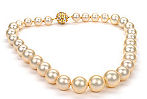
If this was a real pearl necklace it would be worth a fortune!
Tricky one this because it's far from conclusive. Fake pearls are sometimes slightly or more-than-slightly yellow.
Unfortunately, if real pearls are kept in a dark box for a long time they can become dry and yellowish too. Cream is a natural colour for many pearls.
Clasp and Thread
If grandma's necklace is genuine it probably has a decent clasp fitted - not a cheap silver, paste or gold-plated filigree clasp like this. Real pearls would have been strung on silk thread and knotted between each pearl to stop them rubbing together and protect against breakage. Stringing on cotton or twine with or without knots isn't a good omen.Here's an example of an imitation necklace. Note the very large, perfectly formed 'pearls' but cheap clasp.
If this was a real pearl necklace it would be worth a fortune!
Pearl Values
Even if they're real and cost a fortune in their day, second-hand pearls aren't worth much unless there's something special about them - like they were owned by someone famous or have a unique and interesting history. Perhaps they were the sole clue found when a Maharajeen was abducted, or were discovered in the belly of a Tiger shark, still clutched in the divers hand.In recent years, natural, wild pearl prices have been making headlines in international auction houses. This is due to celebrity endorsement coupled with the realisation that new, good quality, wild pearls, are rare.
Howeve, these aren't 'bog-standard' strands but unique pieces incorporating precious gems and metals.
Wild Pearls
Are rare but can still be found.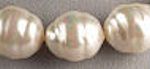 Wild pearls are more likely to look like these baroque pearls than today's round pearls. Wild pearls can be valuable but don't get too excited. It's more probable your inherited pearls are early cultured pearls than wild pearls.
If you really do think you have an interesting strand of wild pearls and want to sell them you'll need to have them authenticated by a gemological laboratory. Then you can approach an international auction house like Bonhams for an estimated auction value.
The Gem and Pearl Laboratory in London can x-ray your pearls, confirm if they are real, and whether they are bead-nucleated, seawater or freshwater.
Selling Your Pearls
 Jackie Kennedy's much-loved triple strand of glass pearls went for over US$200,000 at auction in 1996. An identical replica set can be had for only US$99!
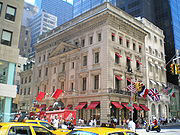 In 1917 jeweller Pierre Cartier bought his company's Fifth Avenue headquarters in New York with $100 in cash and a two-strand natural pearl necklace valued at US$1 million. In 1957 the same necklace was auctioned for just US$157,000.
 The sad reality is that old, second-hand cultured pearls aren't worth a lot. There's no obvious place to sell them and you won't get much from a jeweller or by putting them on eBay.
Our advice is to keep them as a memento or give them to someone who'll appreciate them. Remember though that a once-expensive necklace may have a still valuable clasp.
Do remember that there can be a big difference between resale value and replacement value. If you are looking to insure your pearls you'll need to do a bit of research or get a valuation from a jeweller to find out how much it would cost to replace them if lost.
We still get lots of enquiries from people who have been given or inherited pearls and you can find many answers to their questions here.
Trade In Your Old Necklace
If you can't sell the old one, but you want a brand new cultured pearl necklace, we can help. Send us your old necklace and we'll take £34.00 off the price of a new Grade AAA 7-8mm pearl necklace - the most popular size today.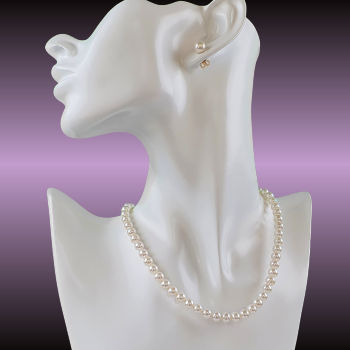
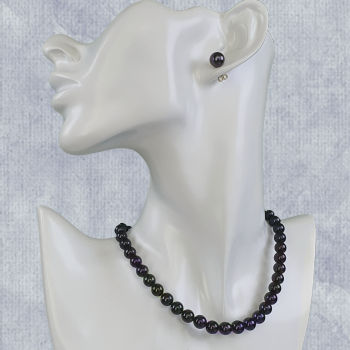
Here's how to get your trade-in:
1. Select the white or black necklace
2. Choose a necklace length and clasp
3. Place your order as normal
4. Send us the old necklace with a copy of your order acknowledgement
5. We'll refund your Card or Paypal account by £34.00